
The panot of Barcelona: the flower millions of people step on every day
Barcelona has the Sagrada Família, the sea, the corners of the Eixample… and a small cement flower that shows up thousands of times under our feet.
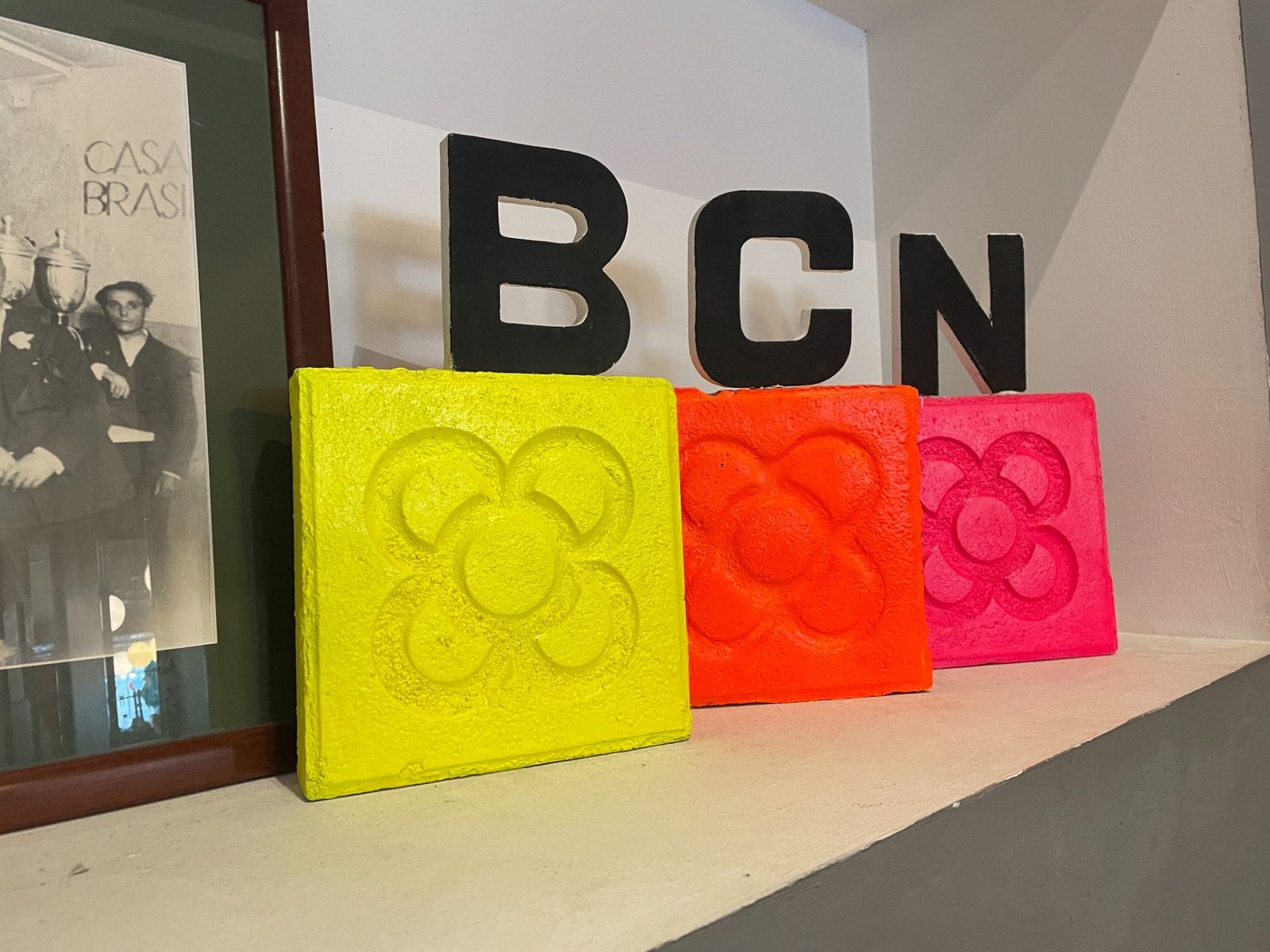
Some symbols of Barcelona make you lift your head. The towers of the Sagrada Família, the modernista façades, Montjuïc, Tibidabo.
And there is one that asks for the opposite: look down.
A small square tile with a four-petal flower repeats along the pavements of Barcelona until it almost becomes part of the landscape. It is called panot and, although it was born as a practical way to pave the city, it managed something far harder: becoming a symbol.
Anyone who has lived in Barcelona has probably stepped on it thousands of times without paying much attention.
In our family it works the other way round.
Nahuel and Alma Mía lived in Barcelona for a few years and they have always loved the panots. For them that flower on the ground is not urban planning or design history. It is simply “Barcelona”.
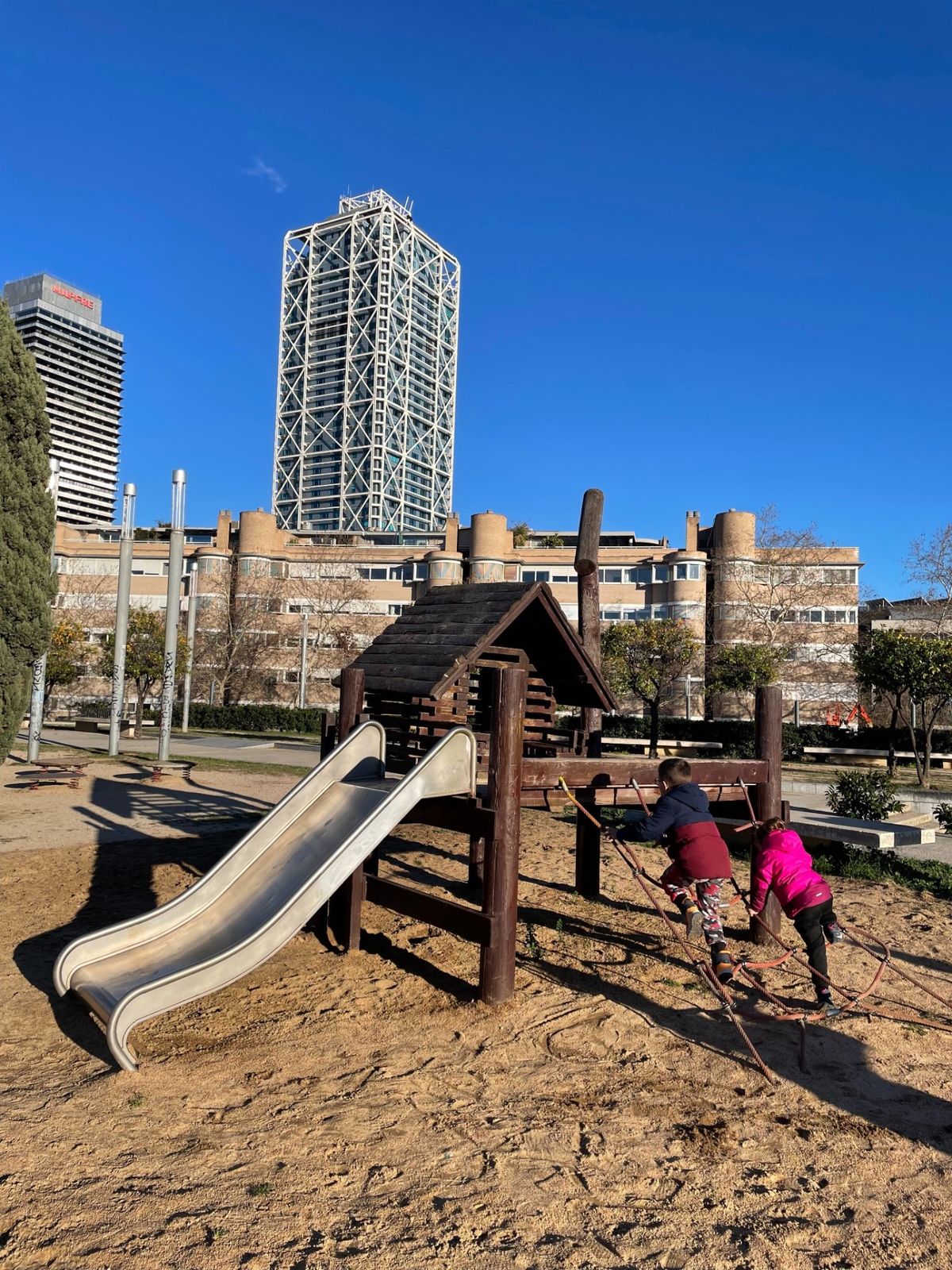
LEVART was born out of exactly that way of looking at places. Read our story
Maybe that is the charm of these small things: they don't need to be monumental to make us remember a place.
Before the flower there was mud
To understand the panot you have to picture the Barcelona of the growing Eixample.
The new blocks laid out around Ildefons Cerdà's plan were transforming the city, but having new buildings did not automatically mean having decent pavements.
During that expansion the state of the pavement was a very real problem. Barcelona needed something cheap, hard-wearing, reasonably simple to manufacture and easy to replace whenever a pavement had to be opened up.
The panot fitted perfectly.
These pieces of cement, sand and water could be mass-produced and laid across large surfaces. Their classic size, 20 by 20 centimetres, also made it easy to lift only the tiles you needed when work had to be done under the pavement.
It wasn't glamorous.
It was pure urban practicality.
And out of that practical solution came one of the most recognisable graphic icons in Barcelona.
A handful of patterns for a new city
In the early twentieth century there were dozens of different models.
Barcelona decided to cut down that variety and standardise its pavements.
Among the classic designs that survived we find the flower, four circles, concentric shapes and other geometric motifs.
In 1916 the company Escofet won a municipal tender to supply panots for the city's pavements.
And then something curious happened.
Of all those patterns, one started to become famous.
The flower.
Four simple petals inside a square.
Nothing especially spectacular.
But repeated once, twice, a hundred, a thousand and millions of times, the flower became part of Barcelona's visual identity.
Did Puig i Cadafalch design it?
Here comes one of those stories the internet repeats so often that it ends up sounding indisputable.
You will often read that the modernista architect Josep Puig i Cadafalch designed the famous flower panot.
There is a reason for the association. Casa Amatller has floors with floral motifs that echo the design, and Puig i Cadafalch is unquestionably part of the city's architectural history.
But directly attributing the municipal flower panot to the architect is not as well documented as it is usually claimed.
So it is more accurate to speak of a visual and historical link with that modernista Barcelona than to present Puig i Cadafalch as the confirmed author of the panot we see in the streets today.
Sometimes a small historical doubt is more interesting than a perfectly closed legend.
From cheap tile to souvenir
The real success of the panot can be measured in a fairly unscientific way: by walking into a souvenir shop.
The flower has jumped from the pavement onto T-shirts, bags, earrings, magnets, coasters and every kind of object.
A piece designed to be stepped on ended up being photographed.
Hard to imagine better professional promotion for a paving tile.
Barcelona City Council itself describes the panot as an iconic pavement that identifies and represents the city.
And the story goes on.
For years Barcelona has been working on the so-called “panot of the 21st century”, trying to keep its visual identity while producing more sustainable, recyclable pavements suited to new urban needs.
Cities change.
Even their paving tiles change.
But the flower is still there.
A city is also remembered through small things
Probably nobody travels to Barcelona just to see a panot.
But an awful lot of people go home having photographed one.
That says a lot about how we build our memories of a place.
We don't only remember monuments.
We remember a smell, a bench, a sign, a corner, the sound of a shutter going up in the morning.
Or a cement flower our children looked for along the pavements.
For Nahuel and Alma Mía the panot is part of their years in Barcelona.
For millions of people it will simply be something they walked over.
And for Barcelona it became one of those symbols that don't need a pedestal.
They just need a pavement.
A stone that doesn't travel
At LEVART we send stones travelling so that every place they pass through adds a chapter to their story.
The panot does almost the opposite.
It stays put.
We are the ones travelling over it.
And maybe that is why we like starting this collection right here.
Because some stones need to cross the world to collect stories.
Others just stay in the same spot and wait for the world to walk over them.
Official sources
Shall we keep looking down?
At LEVART an ordinary stone gets a name, a mission and a QR code. Then it starts travelling from hand to hand.
Looking for inspiration for yours? Ideas to get your stone travelling
Keep discovering
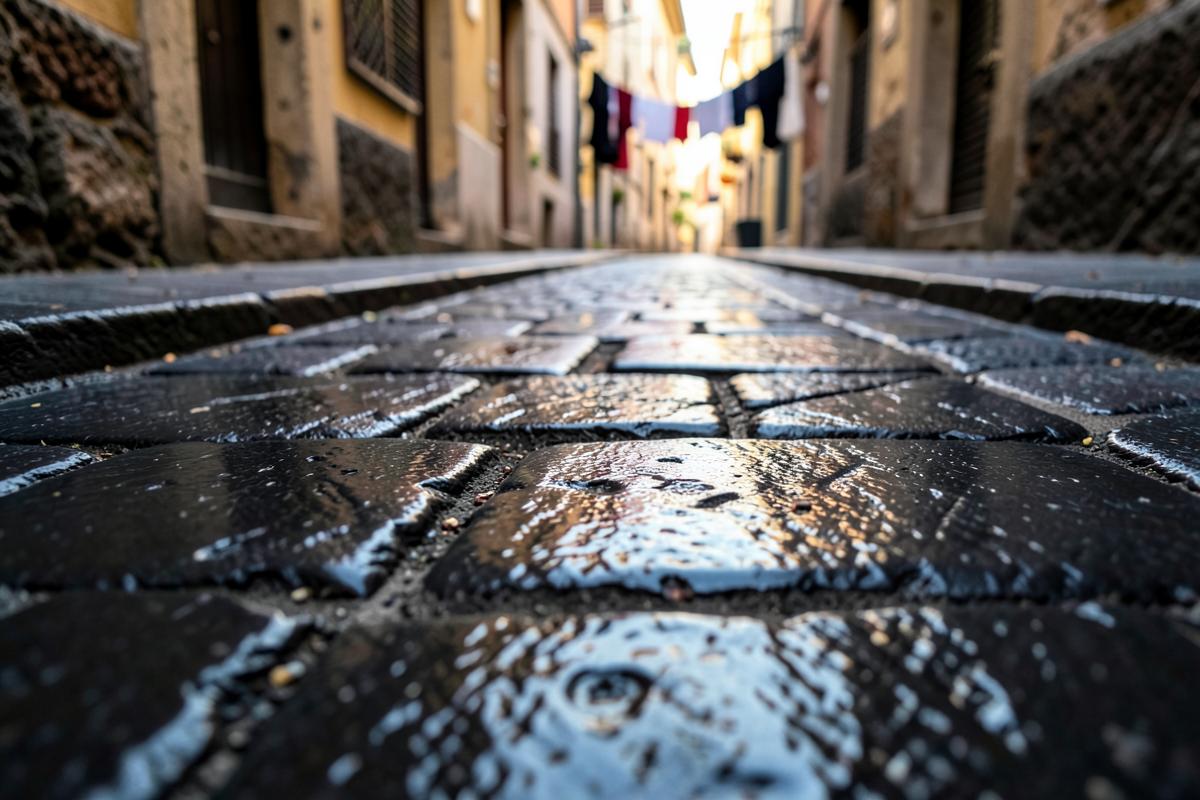 Naples
The stone born from a volcano that ended up becoming the city itself.
The Neapolitan basoli
Discover the story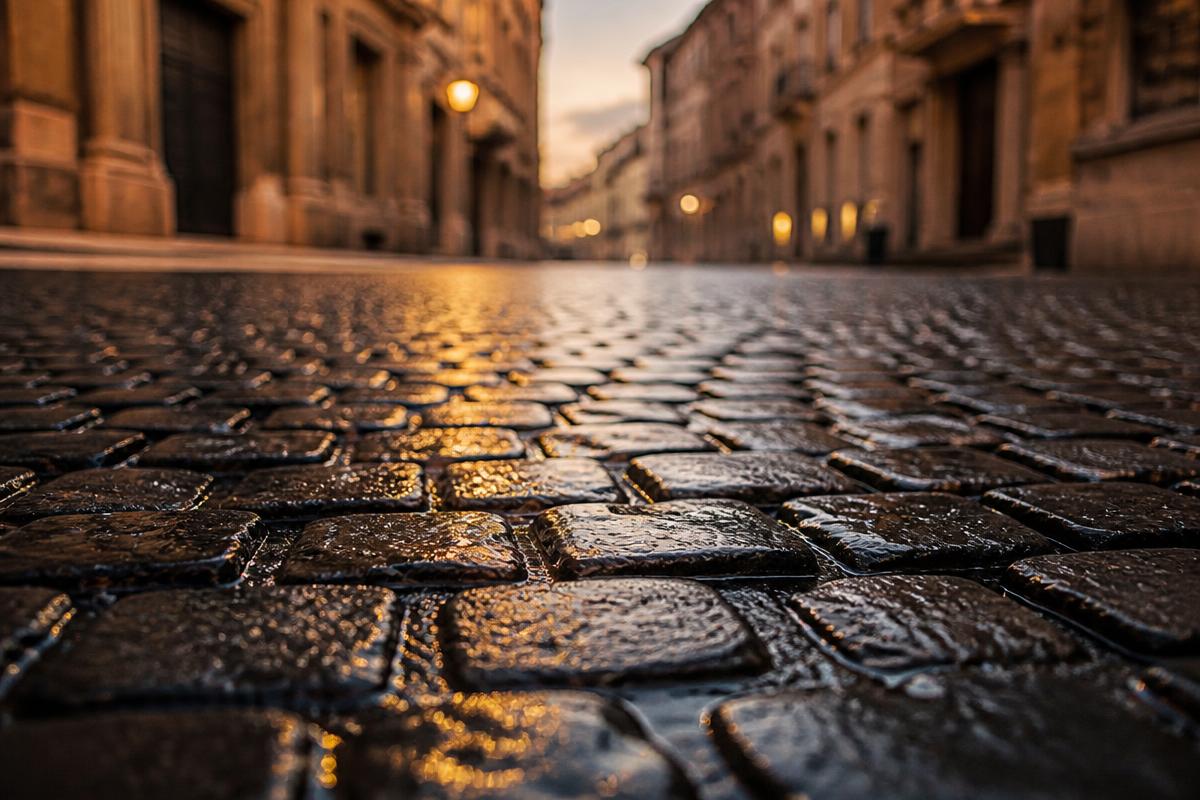 Rome
RomeThe small dark stones Rome has been walking on for centuries.
The sampietrini
Discover the story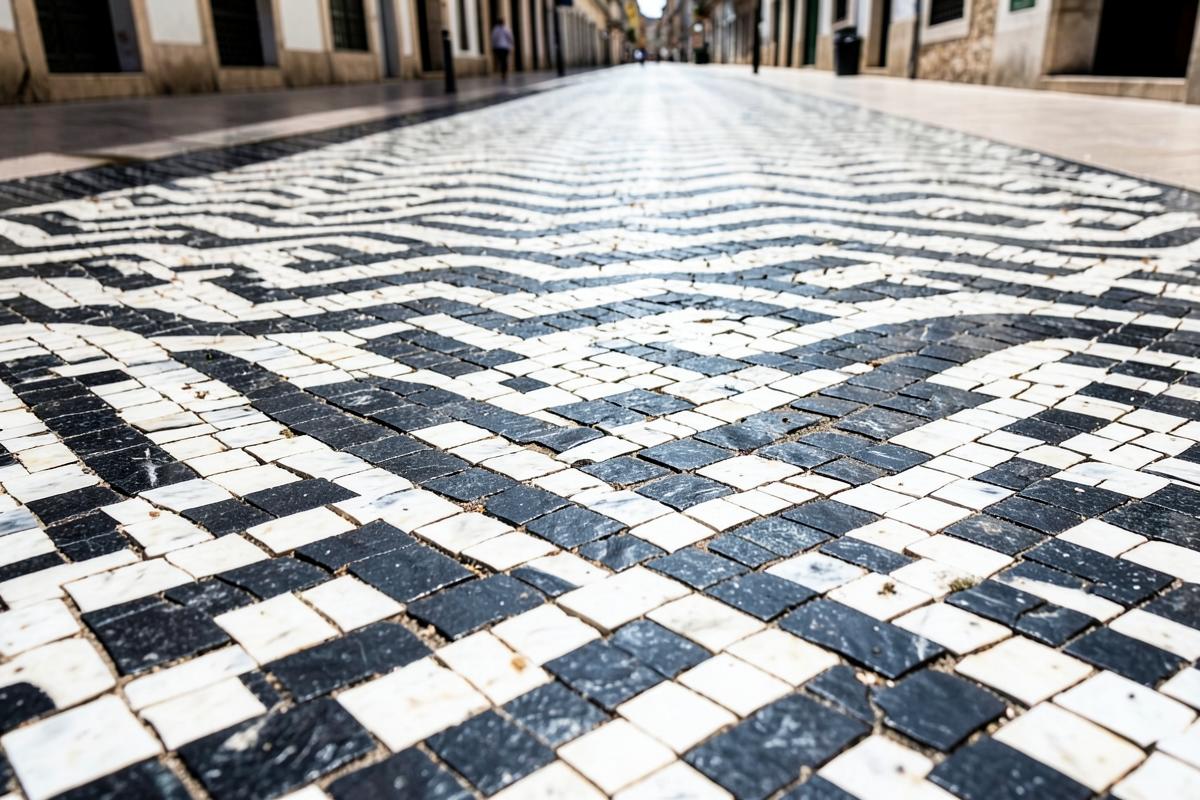 Lisbon
When a pavement stops being a pavement and turns into a drawing.
The calçada portuguesa
Discover the story