
The sampietrini of Rome: the Eternal City also starts on the ground
Rome has almost three thousand years of history above your head. But a good part of its personality is a few centimetres below.
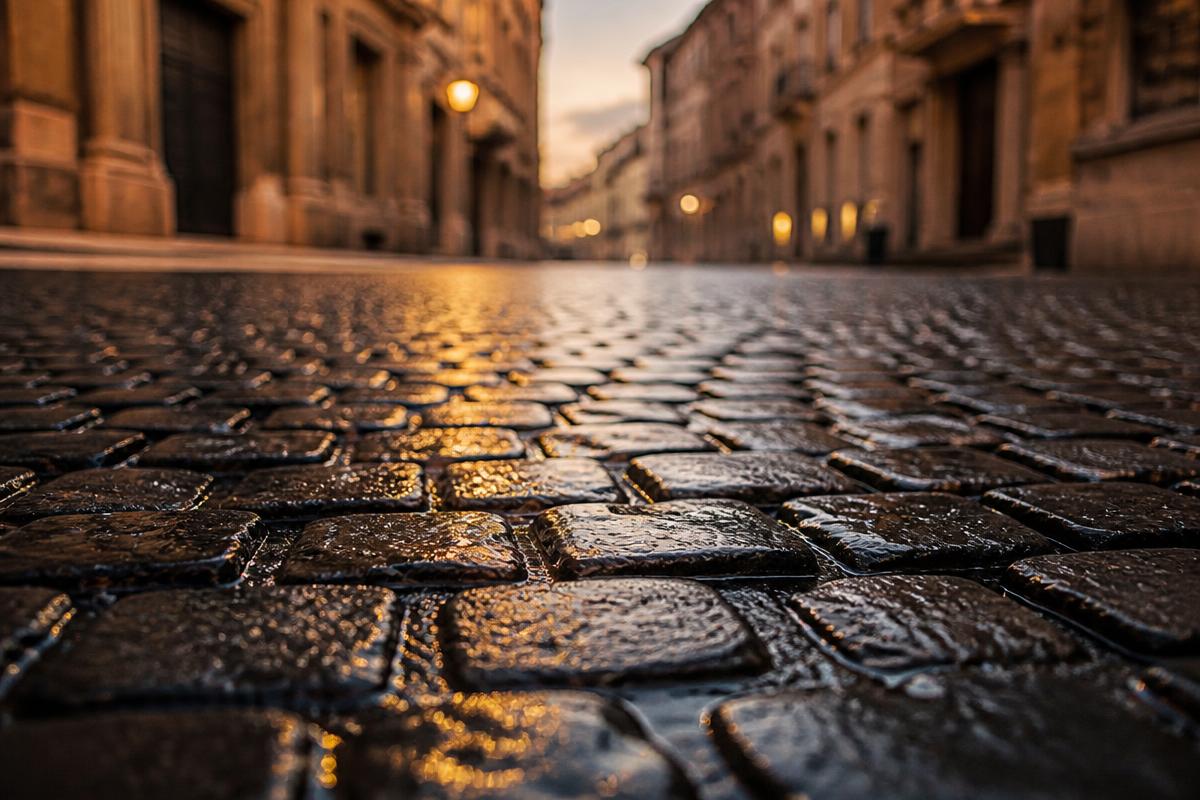
You can walk around Rome looking up for hours.
Domes, columns, ruins, façades, statues, bell towers.
It would be perfectly understandable to forget about the ground.
Until it starts to rain.
Then the small dark blocks in many central streets start to shine, wheels get louder and walking takes a little more attention.
These are the sampietrini.
Or sanpietrini.
One of those things you probably recognise even if you never knew what they were called.
They are not simply cobbles
Sampietrini are small blocks of volcanic rock historically used to pave the streets of Rome.
Their shape lets them be laid very close together while keeping small joints between the pieces.
The result is hard-wearing, adaptable and instantly recognisable.
It also has drawbacks.
With modern traffic they create vibration and noise. When wet they demand attention. Scooters, bicycles and heels don't always have a romantic relationship with them.
Rome has spent years debating where to keep them and where to replace them with asphalt.
And that argument is exactly what proves how much they matter.
Nobody holds big municipal debates about a surface that means nothing.
From St Peter's to the rest of Rome
The name is historically linked to San Pietro.
This kind of Roman paving spread from the late Renaissance onwards and through the following centuries.
Stone pavements of this type were already in use under the pontificate of Sixtus V, and in the eighteenth century they became far more common on important Roman streets.
The word sampietrino stayed tied to the paving associated with the area around St Peter's.
From there those small stones ended up becoming part of the landscape of the whole city.
A solution designed to help carriages move around outlived the arrival of the car.
Not bad as a durability test.
What are they made of?
Although people often say basalt, or even “selce”, the traditional Roman material comes from volcanic rocks of the Lazio region.
That is an interesting geological clue.
Rome has no Vesuvius dominating the skyline as Naples does, but its ground tells a volcanic story too.
The dark stones of the pavement connect the city with the ancient volcanic complexes around it.
A love-hate relationship
Ask a photographer and they will probably tell you about the charm of the sampietrini.
Ask someone who crosses the city on a scooter every day and the answer may change quite a bit.
That contrast is precisely the interesting part.
Preserving a historic city doesn't mean freezing it.
Rome has to keep working.
That is why the municipal plan for these pavements distinguishes between streets where recovering the historic character makes sense and others where traffic needs make a different surface more logical.
On some historic streets the sampietrini are restored.
On others they are replaced with asphalt.
And some of the ones removed can be reused in more suitable areas.
Stones move house too.
Which sounds suspiciously familiar to us at LEVART.
The sound of Rome
Cities don't only have an image.
They also have a sound.
Traffic on sampietrini doesn't sound like traffic on asphalt.
A car, a Vespa or a wheeled suitcase produce a very particular vibration.
It may not show up on postcards.
But it is part of the experience of walking through Rome.
The same goes for what you feel under your feet.
The unevenness forces you to notice the ground.
The pavement stops being completely invisible.
And suddenly you realise a city is also experienced from below.
Rome is never completely finished
That may be the best way to understand the sampietrini.
They are lifted.
They are repaired.
They are replaced.
They are reused.
They disappear from some streets and reappear on others.
They coexist with two-thousand-year-old ruins and electric cars.
Rome has spent centuries layering eras on top of each other without erasing the previous ones.
The sampietrini are simply one more layer.
Small, dark and pretty tough.
If one of these stones could travel…
At LEVART we put a QR code on a stone to find out how far it manages to get.
A Roman sampietrino would probably rather stay where it is.
It has seen enough people go by already.
And maybe that is another way of travelling.
Not moving for generations while the whole world walks past you.
Official sources
Shall we keep looking down?
At LEVART an ordinary stone gets a name, a mission and a QR code. Then it starts travelling from hand to hand.
Looking for inspiration for yours? Ideas to get your stone travelling
Keep discovering
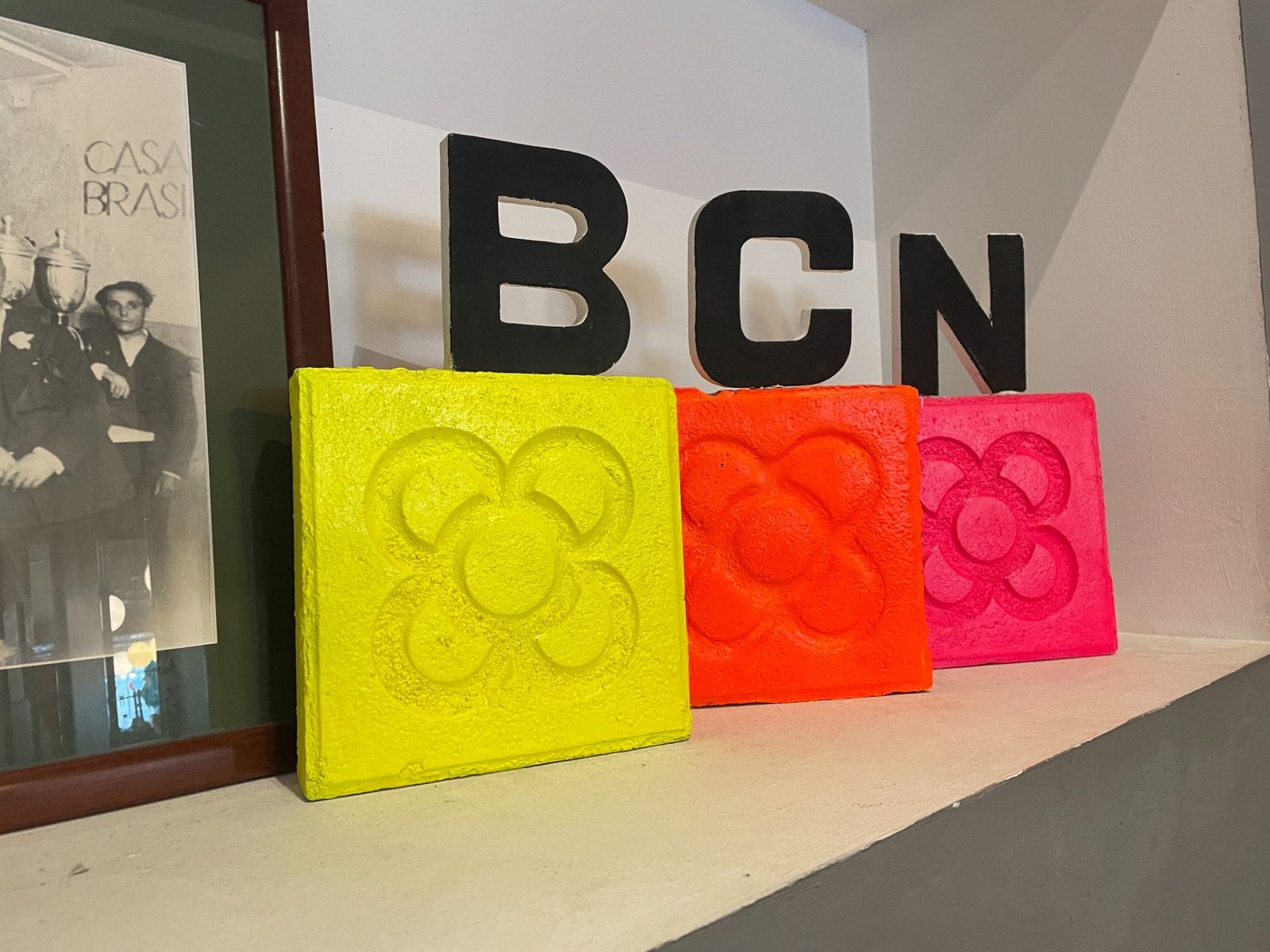 Barcelona
The flower millions of people step on every single day.
The panot of Barcelona
Discover the story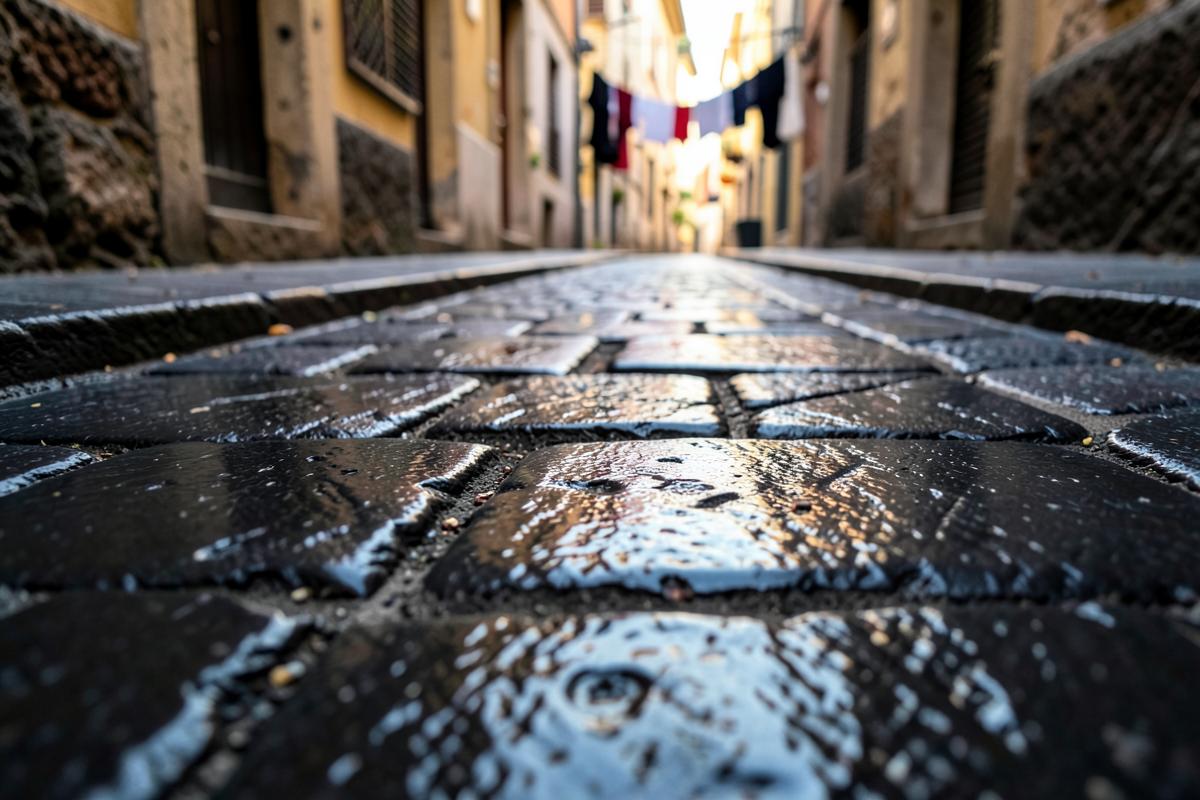 Naples
The stone born from a volcano that ended up becoming the city itself.
The Neapolitan basoli
Discover the story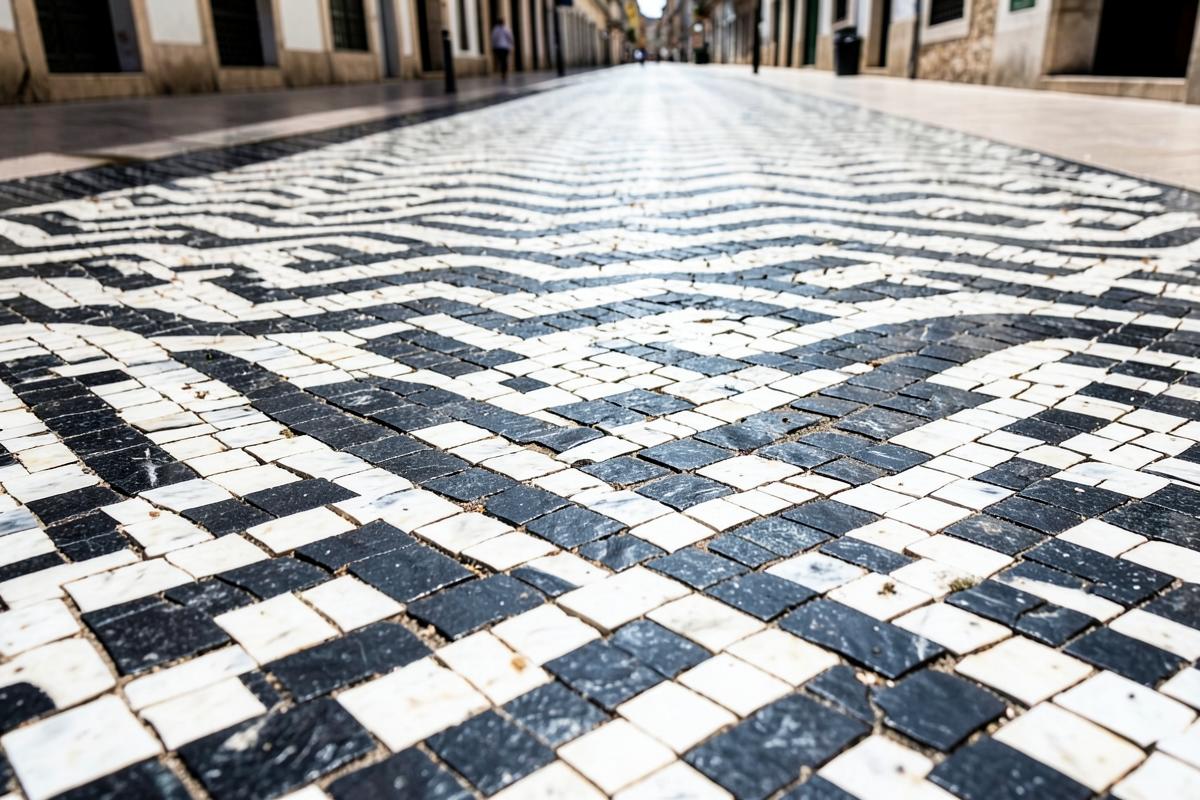 Lisbon
When a pavement stops being a pavement and turns into a drawing.
The calçada portuguesa
Discover the story